BlogBone Health & Perimenopause
What Happens to Your Bones During Perimenopause — And the One Type of Exercise That Actually Helps
A colleague of mine found out she had early osteopenia at 51. She was shocked. She had been doing Pilates three times a week for six years. She ate well, never smoked, had no family history of osteoporosis. She had assumed she was covered. Her bone density scan told a different story.
Her doctor prescribed a calcium supplement and told her to keep exercising. What he did not tell her — because most primary care physicians are not trained in exercise science — is that Pilates does not generate the mechanical loading stimulus required to preserve bone mineral density during perimenopause. She had been doing exactly the right thing by the standards of general fitness, and the wrong thing by the specific demands of bone health during the menopausal transition.
What estrogen does for bone — and what happens when it drops during perimenopause
Bone is continuously remodeled throughout life. Osteoclasts break down old bone. Osteoblasts build new bone. Estrogen suppresses osteoclast activity, keeping this balance in check. When estrogen drops during perimenopause, osteoclast activity accelerates and the balance tips toward net bone loss.
According to Mass General Brigham researchers, women lose on average 1 to 2 percent of bone mineral density per year during the menopausal transition, with some losing 3 to 5 percent annually. Over the 5 to 7 year window of accelerated bone loss in perimenopause, this can add up to 10 to 20 percent of total bone density. The Bone Health and Osteoporosis Foundation estimates that one in two postmenopausal women will experience a major osteoporotic fracture in their lifetime. A hip fracture after 65 carries a 20 percent one-year mortality rate.
These are not statistics about old age. They are statistics about the trajectory set during your 40s and 50s.
Why walking and Pilates aren't the best exercise for bone health in perimenopause
Walking has a strong and well-deserved evidence base for cardiovascular and metabolic health. For bone density specifically during perimenopause, walking is not sufficient. It generates ground reaction forces approximately 1 to 1.5 times body weight — a mild mechanical stimulus, but not enough to counteract the accelerated bone resorption that estrogen decline drives. A systematic review in the journal Menopause found that walking alone produced minimal improvements in lumbar spine and femoral neck bone mineral density in perimenopausal and postmenopausal women.
Pilates has real clinical value for core stability, spinal mobility, and balance. The 2025 Frontiers in Physiology network meta-analysis compared seven exercise modalities across 75 randomized controlled trials and found Pilates was not among the top performers for bone mineral density outcomes at the lumbar spine or femoral neck. The loading forces generated in most Pilates movements are well below the mechanical threshold required for meaningful osteogenic adaptation.
My colleague was not doing nothing. She was doing something genuinely good for her body. She just was not doing the thing her bones specifically needed during perimenopause.
The loading stimulus bone actually responds to
Bone adapts to mechanical load through a process called mechanotransduction. Bone-sensing cells detect deformation in the tissue and trigger bone-building activity. The higher the load and the faster it is applied, the stronger the osteogenic signal.
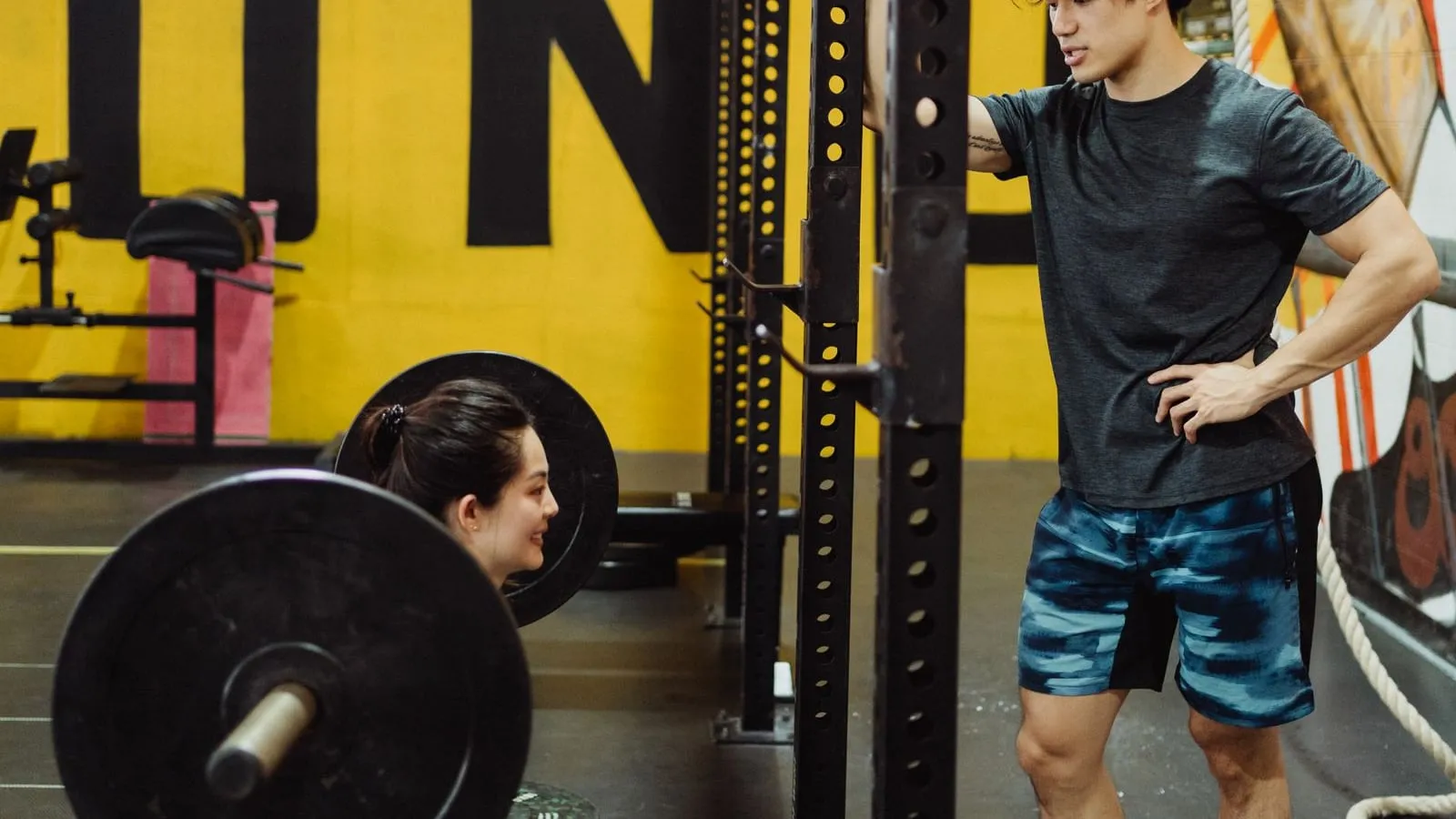
This is why heavy compound movements are the best exercise for bone health in perimenopausal women. A squat or deadlift at 75 to 85 percent of one-rep max generates substantially higher joint reaction forces through the hip and spine than any bodyweight or light resistance exercise. The LIFTMOR trial demonstrated this directly: women with diagnosed osteopenia and osteoporosis performing twice-weekly high-intensity resistance training achieved significant, safe gains in spine and hip bone density using loads at 80 to 85 percent of one-rep max.
Power training adds an independent layer. A study in the Journal of Applied Physiology found that training emphasizing speed of contraction outperformed conventional strength training for bone mineral density maintenance in postmenopausal women. Explosive contractions generate faster loading rates and higher peak forces, producing a stronger bone adaptation signal.
The perimenopause window for bone health is real — and it closes
The perimenopausal period is the optimal time to intervene on bone health. The University of Calgary's STOP-EM trial found that resistance training initiated during perimenopause produced better bone preservation outcomes than the same intervention started in early postmenopause. Bone responds more readily before substantial loss has accumulated.
After my colleague got her results, she switched to a progressive resistance training program twice a week. Within nine months her follow-up scan showed stabilization. Not reversal — stabilization. That is what the intervention window looks like when you act during it rather than after.
The problem is that bone loss during perimenopause is invisible until a scan or a fracture reveals it. Most women in their 40s who are otherwise health-conscious have no idea where their bone density currently stands. That is the gap worth closing.
Want to understand the full picture of what's changing in your body during perimenopause — including muscle fiber loss and slower recovery? Read Why Your Workouts Feel Harder in Your 40s.