BlogPerimenopause & Exercise
Why Your Workouts Feel Harder in Your 40s — And What the Science Says to Do About It
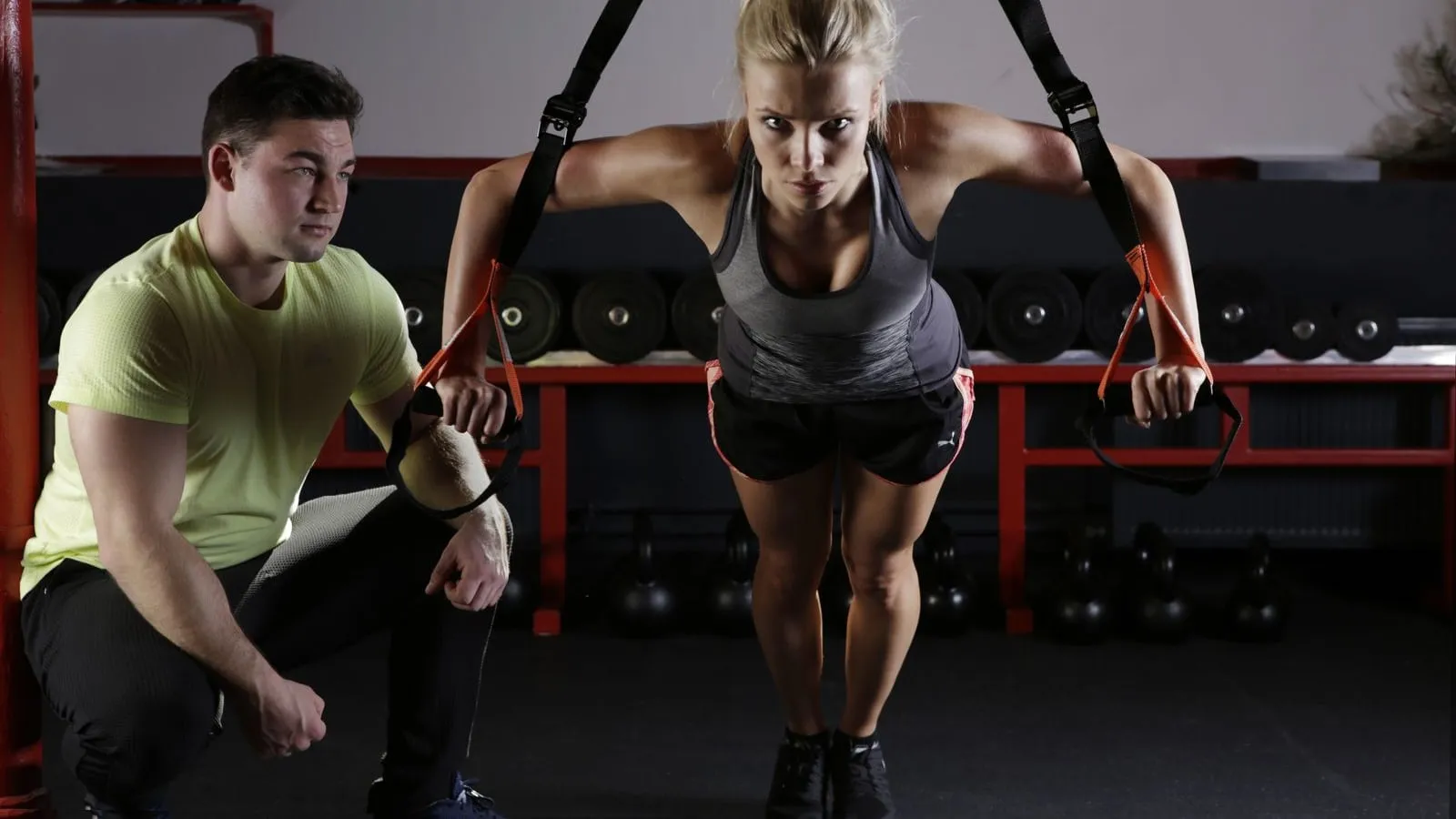
A close friend of mine — 46, runs half marathons, has been strength training since her 30s — called me a few months ago frustrated. She said her workouts felt completely different to what they used to. Same program, same effort, noticeably less recovery, noticeably less result. She assumed she needed to push harder. She was wrong. She needed to train differently.
I have had versions of this conversation with a lot of perimenopausal women in their 40s. The effort is there. The consistency is there. The results are not tracking the way they used to. And the typical response — more volume, more intensity, more discipline — tends to make things worse, not better. The actual explanation is biological, specific, and completely actionable once you understand it.
What estrogen actually does for muscle — and what happens when it drops
Most of us learned in school that estrogen regulates the reproductive cycle. What gets far less airtime is what it does in skeletal muscle. Estrogen plays a direct role in satellite cell function — the stem cells responsible for repairing and rebuilding muscle tissue after physical stress. In 2024, researchers at the University of Minnesota published the first study to establish that estrogen loss causes a 30 to 60 percent drop in satellite cell numbers across five major muscle groups. The surviving cells had severely impaired ability to regenerate muscle after exercise.
This is the mechanism behind slower muscle recovery in perimenopause. The repair machinery your muscles rely on after a training session is operating at reduced capacity. The same workout your body handled efficiently at 38 creates a demand it cannot meet at the same speed at 46. Pushing harder into that deficit does not solve it.
Compounding this, the type of muscle fiber most affected by estrogen decline is the type II fiber — the fast-twitch fibers responsible for power, speed, and explosive movement. A longitudinal study from the ERMA cohort, which followed 234 women from perimenopause to early postmenopause, found measurable losses in lean body mass and thigh muscle cross-sectional area beginning before the final menstrual period. These changes start during the transition, not after it.
Why the program that worked at 35 stops working at 47
My friend's program was not bad. It was just designed without accounting for where her body actually was. Most fitness programs are not built around the hormonal and physiological state of a perimenopausal woman. They are generic. And a generic program that does not account for accelerated type II fiber loss, reduced satellite cell function, and the specific loading requirements for bone health during estrogen decline will produce increasingly diminishing returns.
A 2023 systematic review in the Journal of Clinical Medicine analyzed randomized controlled trials on strength training in menopausal women and found that progressive resistance training — with loads between 65 and 85 percent of one-rep max, applied progressively over time — was the most effective perimenopause exercise intervention for preserving lean muscle mass and bone density during the menopausal transition. Walking, yoga, and standard cardio did not produce comparable outcomes on these specific measures.
The word progressive is doing real work in that sentence. A program where the load never increases is not progressive resistance training. It is maintenance at best. Pushing back against estrogen-driven muscle and bone decline requires a stimulus that consistently increases as strength improves.
The power component most perimenopausal workout programs skip
Strength and power are different qualities. Strength is the maximum force you can produce. Power is how fast you can produce it. They are trained differently and they decline at different rates — power drops faster with age.
A 2024 study in Mayo Clinic Proceedings found that women who trained specifically for power output had significantly lower all-cause mortality, independent of total exercise volume. The mechanism is straightforward: fast-twitch fiber function governs power, and power is the quality most predictive of fall prevention. The ability to catch yourself when you stumble — to react quickly and generate force in a fraction of a second — comes from this fiber type. Training it explicitly, through high-velocity movements like kettlebell swings, medicine ball throws, and dynamic step patterns, preserves the function that determines physical independence at 75.
What actually works for women in perimenopause
Two to three sessions per week of progressive resistance training targeting compound movements — squats, deadlifts, hip hinges, rows — produces the highest clinical return for perimenopausal women on both bone and muscle outcomes. The 2025 Scientific Reports meta-analysis of 75 randomized controlled trials found resistance training outperformed every other exercise modality tested on lumbar spine and femoral neck bone mineral density.
The loading needs to be heavier than most women have been told is appropriate for them. The LIFTMOR trial used 80 to 85 percent of one-rep max loads in women with diagnosed osteopenia and osteoporosis and produced significant, safe gains in spine and hip bone density. Lighter loads do not generate the mechanical stimulus required.
The perimenopausal window is the optimal time to build this foundation. The University of Calgary's STOP-EM trial confirmed that strength training initiated during perimenopause produces meaningfully better bone preservation outcomes than the same intervention started after menopause. My friend has been doing the work for years. What she needs is not more of it — it is work that is calibrated to exactly where her body is right now.
Not sure where you currently stand? The 30-second sit-to-stand test is a fast at-home fitness test that gives you a clinically validated benchmark for your lower body function right now.